Construction machinery operates in some of the most demanding environments on earth—mining sites, infrastructure projects, and heavy excavation zones. In these conditions, engine efficiency, durability, and power output are essential. A construction machinery turbocharger plays a vital role in enhancing engine performance by increasing air intake efficiency and improving combustion. This article explores how turbochargers work, their benefits, common issues, maintenance strategies, and buying considerations, helping equipment owners and operators maximize machine uptime and reduce operational costs.
1. Introduction
Modern construction projects depend heavily on powerful machinery such as excavators, bulldozers, loaders, and cranes. These machines must perform under extreme loads, harsh weather conditions, and continuous operation cycles. At the heart of their performance lies a crucial component—the turbocharger.
A construction machinery turbocharger enhances engine efficiency by forcing more air into the combustion chamber, enabling more fuel to be burned effectively. This leads to higher power output without significantly increasing engine size. For industries where productivity directly translates into profitability, this technology is indispensable.
2. What Is a Construction Machinery Turbocharger?
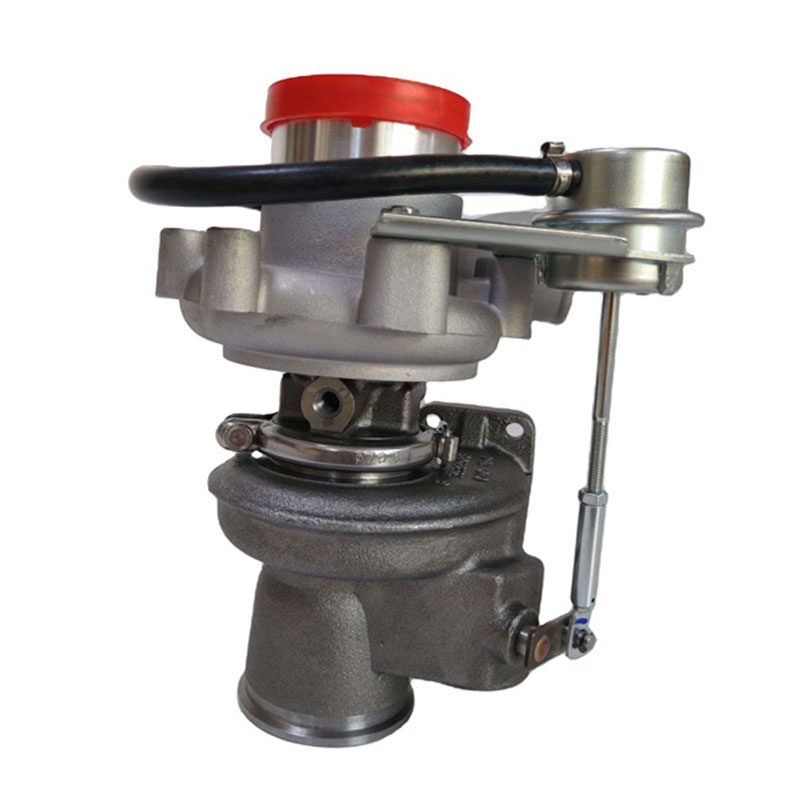
A construction machinery turbocharger is a forced induction device that improves an engine’s efficiency and power output by compressing air entering the combustion chamber. It uses exhaust gases from the engine to spin a turbine, which drives a compressor that increases air density.
-
Turbine side: Driven by exhaust gases
-
Compressor side: Pressurizes incoming air
-
Shaft: Connects turbine and compressor
-
Bearing system: Ensures smooth rotation
This system allows smaller engines to produce power levels comparable to larger engines, making machinery more efficient and compact.
3. How Does It Work?
The operation of a turbocharger is based on energy recovery from exhaust gases. Instead of wasting exhaust energy, it is reused to improve engine performance.
-
Engine burns fuel and produces exhaust gases
-
Exhaust gases spin the turbine wheel
-
Turbine drives compressor via shaft
-
Compressor draws and compresses air
-
Dense air enters combustion chamber
-
More oxygen allows better fuel combustion
This cycle significantly increases engine efficiency and power output while maintaining fuel economy.
4. Key Benefits
A construction machinery turbocharger delivers multiple advantages that directly impact operational performance and cost efficiency.
|
Benefit
|
Description
|
|
Increased Power
|
Boosts engine output without increasing engine size
|
|
Fuel Efficiency
|
Improves combustion efficiency, reducing fuel consumption
|
|
Reduced Emissions
|
Cleaner combustion reduces environmental impact
|
|
Compact Design
|
Smaller engines deliver high performance
|
|
Better Torque
|
Enhances low-end torque for heavy lifting operations
|
5. Common Pain Points & Solutions
Despite its advantages, turbochargers can face operational challenges in construction environments.
-
Overheating: Caused by insufficient cooling → Solution: Improve oil circulation and cooling systems
-
Oil contamination: Leads to bearing wear → Solution: Regular oil filter replacement
-
Turbo lag: Delay in power delivery → Solution: Use variable geometry turbochargers
-
Blade damage: From debris intake → Solution: Install high-quality air filters
6. Types of Turbochargers
-
Fixed Geometry Turbocharger: Simple and cost-effective, suitable for stable workloads
-
Variable Geometry Turbocharger (VGT): Adjusts airflow for better efficiency across speeds
-
Twin Turbo System: Uses two turbochargers for higher power output
-
Electric Turbocharger: Reduces lag using electric assistance
7. Maintenance Tips
Proper maintenance ensures long service life and consistent performance of construction machinery turbochargers.
-
Use high-quality engine oil and replace it regularly
-
Allow engine cooldown before shutdown
-
Inspect air filters frequently
-
Check for oil leaks and seal damage
-
Avoid sudden engine acceleration when cold
8. Troubleshooting Guide
|
Issue
|
Possible Cause
|
Solution
|
|
Power loss
|
Clogged air filter
|
Replace or clean filter
|
|
Excess smoke
|
Oil leakage into combustion chamber
|
Inspect seals and bearings
|
|
Whining noise
|
Worn bearings
|
Replace turbocharger components
|
|
Slow acceleration
|
Turbo lag or exhaust blockage
|
Clean exhaust system
|
9. Buying Guide
Choosing the right construction machinery turbocharger is essential for maximizing machine performance.
-
Check engine compatibility
-
Evaluate material durability (heat-resistant alloys preferred)
-
Consider OEM vs aftermarket options
-
Assess maintenance support availability
-
Verify performance ratings under load conditions
10. Industry Applications
-
Mining equipment (drills, loaders)
-
Excavators and bulldozers
-
Road construction machinery
-
Heavy lifting cranes
-
Agricultural heavy tractors
In each of these applications, turbochargers ensure machines can operate efficiently under continuous heavy loads.
11. Future Trends
The future of construction machinery turbochargers is moving toward smarter, more efficient systems.
-
Integration with electronic engine control systems
-
Electric-assisted turbocharging
-
Advanced thermal-resistant materials
-
AI-based performance optimization
These innovations aim to reduce fuel consumption while increasing operational efficiency and machine lifespan.
12. FAQ
Q1: What is the main purpose of a construction machinery turbocharger?
It increases engine power and efficiency by compressing air for better combustion.
Q2: How long does a turbocharger last?
With proper maintenance, it can last between 100,000 to 150,000 operating hours.
Q3: What causes turbocharger failure?
Common causes include oil contamination, overheating, and lack of maintenance.
Q4: Can turbochargers improve fuel efficiency?
Yes, they optimize combustion, which reduces fuel consumption significantly.
Q5: Are turbochargers suitable for all construction machines?
Most modern heavy-duty machines are compatible, but engine matching is essential.
13. Conclusion
The construction machinery turbocharger is a critical component that significantly enhances the performance, efficiency, and sustainability of heavy-duty equipment. By optimizing air intake and combustion, it allows machines to operate at higher power levels while reducing fuel consumption and emissions.
For construction companies, mining operators, and equipment managers, investing in high-quality turbocharger systems is a strategic decision that directly impacts productivity and operational cost efficiency.
Shandong Skyond Import and Export Trading Co., Ltd. provides high-performance industrial components designed for heavy-duty machinery applications. If you are looking for reliable turbocharger solutions that enhance machine efficiency and durability, our team is ready to support your needs.
Contact us today to explore premium construction machinery turbocharger solutions tailored for your equipment and business requirements.


 Sales Manager
 email